
On this page
Quebec runs on its own operating system: French first, its own park network, its own road rules, and one health billing rule that catches visiting Canadians every year. The traveller's Quebec spans a walled capital, whales at the Saguenay's mouth, and a peninsula loop that rivals any coastal drive in the country.
Roads and driving
- Winter tires are the law from December 1 to March 15 on Quebec-registered vehicles, rentals included. Fines apply and nobody sensible tests the point.
- Right turns on red are banned across the whole Island of Montreal, unlike the rest of the country, and the cameras are not a rumour.
- Quebec 511 covers conditions and closures. Autoroutes run 100 km/h, the lowest top limit outside PEI.
- Stop signs read ARRÊT and the road vocabulary is French: sortie is exit, pont is bridge. It becomes automatic within a day.
What it costs
| Cost | Typical | Notes |
|---|---|---|
| Sales tax | 14.975% | 5% GST plus 9.975% QST, the highest combined rate in Canada |
| Hotel tax on top | 3.5% lodging tax | Charged on the room rate before the sales taxes |
| Sépaq park access | About $10 per adult, per day | Charged separately from camping; an annual card exists |
| Sépaq campsite | $30 to $50 a night | Ready-to-camp tents and cabins cost considerably more |
| Tolls | A25 and A30 bridges near Montreal | Electronic, billed by plate or transponder |
| A doctor visit for other Canadians | Paid up front | Quebec is outside the interprovincial billing agreement |
Checked August 2026. Sépaq publishes current access and camping rates.
Fire bans and camping
SOPFEU runs wildfire prevention, posting the fire danger index and open-fire bans by zone, with municipalities and Sépaq parks layering rules on top. Quebec's provincial parks are called national parks and run by the Sépaq, a polished network with strong gear rental and ready-to-camp tents for the equipment-free. Wilderness camping on public land is allowed across much of the territory, and the ZECs and wildlife reserves in between offer cheap rustic sites. Federal parks, Forillon and La Mauricie, book through Parks Canada.
Rules and practicalities
| Category | In Quebec |
|---|---|
| Winter tires | Legally required December 1 to March 15, not merely advised |
| Right on red | Banned everywhere on the Island of Montreal, legal elsewhere in the province |
| Top speed limit | 100 km/h on autoroutes |
| Alcohol | 18. SAQ for spirits and most wine, beer and wine in any dépanneur or grocery |
| Cannabis | 21, the highest age in Canada. SQDC stores only, no edibles beyond a short list |
| Health cover | Other provinces' cards are not accepted. Pay the clinic and claim back at home |
| Language | French first on every sign and menu. Tourism areas are broadly bilingual |
| Roadside alcohol limit | No administrative 0.05 suspension, unlike the rest of Canada. Zero for drivers 21 and under |
When to go
| Season | Best for | Watch for |
|---|---|---|
| March to April | Sugar shack season, the province's best local ritual | Mud season on trails, cold nights |
| June to August | Whales at Tadoussac, the Gaspé loop, festivals every weekend | Montreal construction, peak prices in Old Québec |
| September to October | Fall colour, whales still running, thinner crowds | Coastal services close after Thanksgiving |
| December to February | Winter Carnival, skiing, ice hotels, snowshoeing | Winter tire law, storm closures, minus 25 mornings |
The stops worth planning around
- Old Québec: the only walled city north of Mexico. Stay inside the walls once in your life.
- Tadoussac and the Saguenay fjord: belugas year-round, big whales June to October.
- The Gaspé loop: Percé Rock, Forillon's cliffs and fishing villages for 900 km.
- Mont-Tremblant and the Laurentians: the ski-and-lake weekend machine north of Montreal.
- The Eastern Townships: vineyards, round barns and lake towns along the Vermont border.
- Montreal: bagels, markets, the Plateau's staircases, and a festival calendar with no off-season.
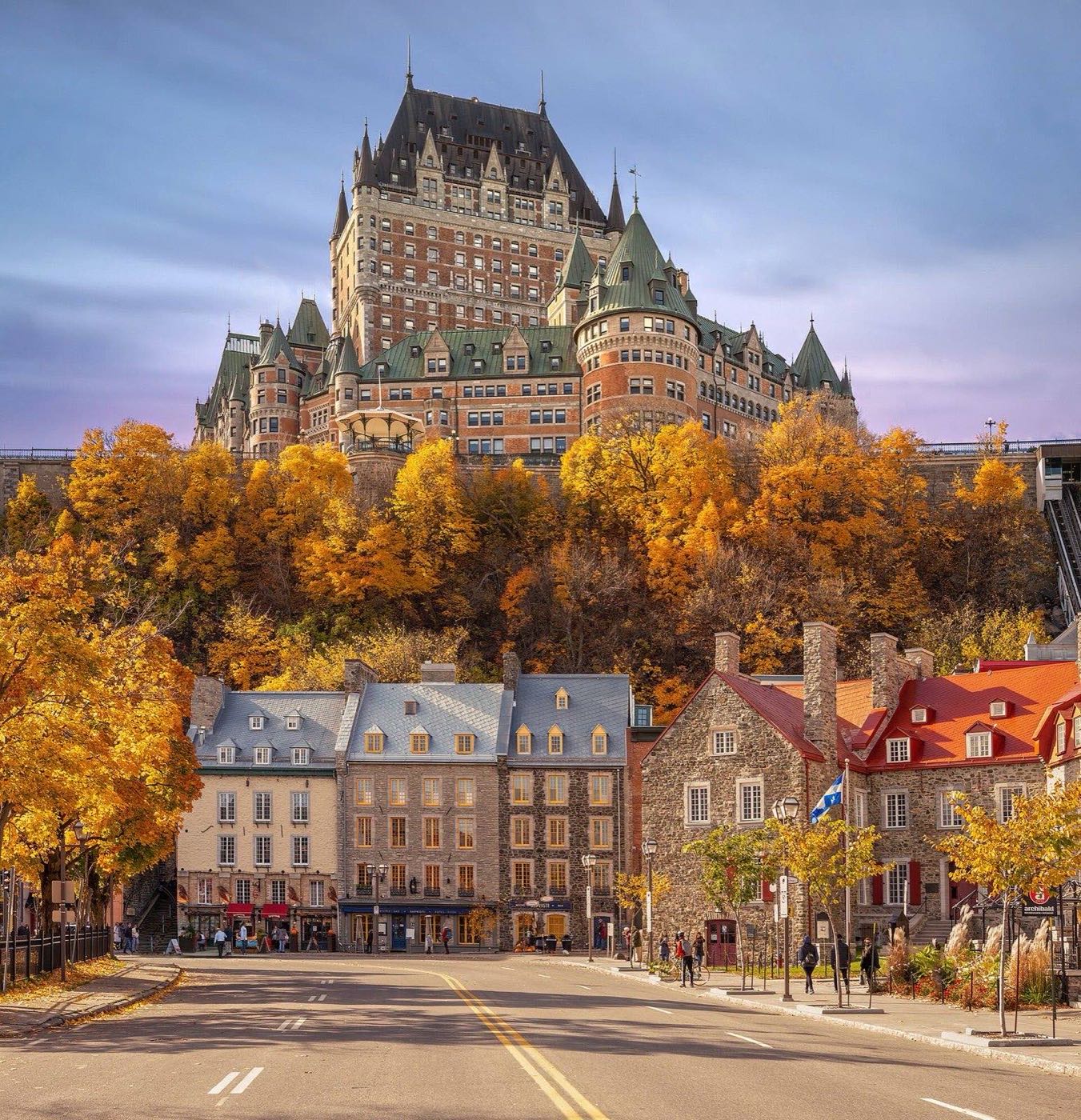
Location: Old Québec
Location: Percé Rock, Gaspé Peninsula
Plan Quebec City
The official pages
Common questions
- Do rental cars in Quebec have winter tires?
- Yes. Winter tires are mandatory in Quebec from December 1 to March 15 and rental companies equip their in-province fleets accordingly. If you rent outside Quebec and drive in, the law targets Quebec-registered vehicles, but the physics does not read plates.
- Is my Canadian health card accepted in Quebec?
- No. Quebec is the one province outside the interprovincial reciprocal billing agreement, so visitors from elsewhere in Canada pay the clinic or hospital directly and submit receipts to their home plan afterwards. Reimbursement is at the home province's rates, which may be lower than the bill.
- Do you need French to travel in Quebec?
- No, but a bonjour opens every door. Tourism-facing Quebec is broadly bilingual, especially in Montreal and Old Québec, while rural Gaspé and the Côte-Nord run more purely in French. Menus, road signs and park information are French first, and translation apps close the rest of the gap.
- When is whale season in Tadoussac?
- June through October for the big migratory whales, including fins, humpbacks and the occasional blue, with belugas resident in the Saguenay all year. September pairs active whales with fall colour on the fjord, which is the connoisseur booking.
Tip
Quebec stacks a 3.5 percent lodging tax under the sales taxes, so a room quoted at 200 dollars settles nearer 240. The hub tables carry every province's equivalent.